
Biodiversity Net Gain Consultants
Leaving the environment in at least a 10% measurably better state than it was before.
Full Membership

Fully Licenced

Fully Insured

ICO Compliant
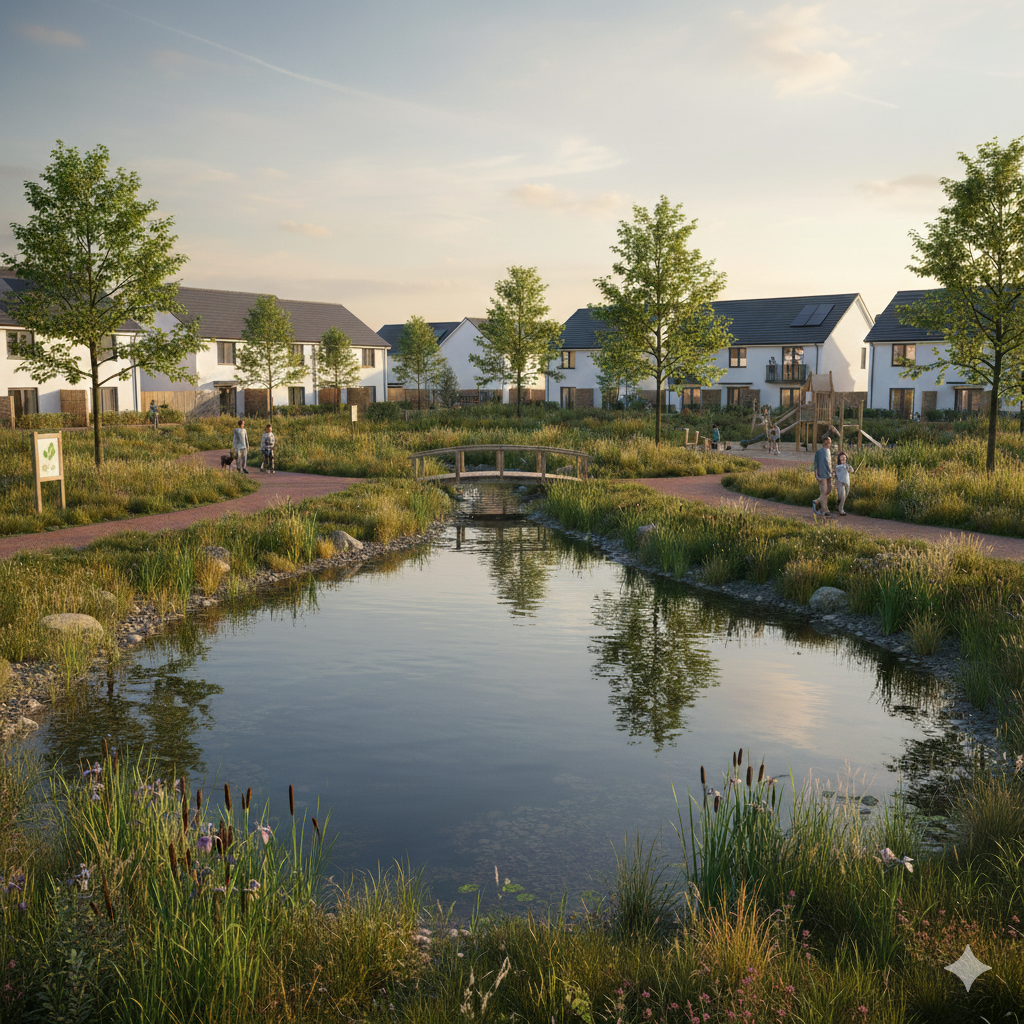
Mandatory since February 2024, Biodiversity net gain (BNG) is a way of creating and improving natural habitats.
Biodiversity Net Gain (BNG) is a legal requirement in England under the Environment Act 2021. It ensures that any new development leaves the natural environment in a measurably better state than before.
The 4 steps to BNG freedom
We’ve broken down all the complex steps into four simple phases, so our clients meet BNG legislation quickly.
1.
Preliminary Ecological Appraisal (PEA)
A PEA is the first stage in assessing a site’s biodiversity value and is usually carried out as early as possible in the planning process. The purpose of a PEA is to: Identify any potential for; ecological constraints, the need for further ecological surveys, any mitigation measures, and opportunities for ecological enhancement. As well as gaining a baseline for BNG.
2.
The Statutory Biodiversity Net Gain (BNG) Metric
The statutory biodiversity metric is used to calculate biodiversity units and is made up of three modules: Area habitat units, Hedgerow units, and Watercourse units. The value of a habitat is determined by a number of factors, including: The habitat’s size, The habitat’s distinctiveness, The condition and quality of the habitat and The connectivity of the site to other areas.
3.
Biodiversity Net Gain Plans & HMMPs
4.
Delivery & Support throughout
Finally, we help you turn your plan into reality. Whether you’re enhancing on-site habitats, purchasing BNG offset units through our trusted partners, or managing long-term monitoring, we make sure your commitments are delivered efficiently and transparently. With The BNG Guy by your side, you can focus on your project — knowing your BNG obligations are fully met and documented.

BNG in your area
Using an understanding of every local council, we cover the midlands and further afield. Find your local planning authority from the list below.

BNG and the law
As a developer, you will find everything you need to know about our consultancy, consultants and BNG considerations in this section.

BNG insights
Learn more about biodiversity net gain, the average cost of BNG units, current BNG policies and what the future of BNG looks like.
Understanding Biodiversity Net Gain: Your Complete Guide to BNG Metrics, Plans, Legislations and Planning Success

Fully Accredited
We’re fully accredited, licenced and insured. Our experienced ecologists are full members of CIEEM, licenced by Natural England and are covered by comprehensive insurances.
Fast & Reliable

Recommended

100% Success
What is Biodiversity Net Gain?
Biodiversity Net Gain (BNG) requires developments to leave the natural environment in a measurably better state than before. Where applicable, an experienced BNG consultant will help protect existing ecological features, retain and enhance habitat types, and prevent biodiversity loss so the project advances in an environmentally responsible way.
BNG was designed to counteract the potential ecological impacts of development. It not only compels like-for-like replacement of lost habitats, but also drives habitat creation, enhancement, and restoration so the site achieves a net improvement that can be evidenced and audited.
In practice, BNG commonly requires a minimum 10% uplift from the pre-development biodiversity value to the post-development value, secured and managed for at least 30 years. Most residential and commercial schemes are in scope (including many nationally significant projects), though some exemptions exist at validation (e.g., certain small self-builds and custom builds, householder applications, de minimis cases, or where land is already on an approved biodiversity gain sites register).
Frequently Asked Questions About BNG
What Types of Developments Require Biodiversity Net Gain?
Under the UK’s Environment Act 2021, most major developments are legally required to deliver a minimum 10% Biodiversity Net Gain (BNG). This includes:
- Residential developments: Housing projects involving new construction, especially larger-scale residential areas, are required to achieve net gains.
- Commercial and industrial developments: Business parks, industrial estates, warehouses, and other commercial developments also fall under BNG requirements.
- Infrastructure projects: Major roadworks, rail projects, and other large infrastructure developments are often required to consider BNG impacts.
Some smaller-scale projects and developments on previously developed land, known as “brownfield sites,” may be exempt or subject to different rules depending on the extent of their environmental impact. The specifics can vary by local authority, so it’s advisable for developers to consult with local planning authorities to determine BNG requirements for smaller or less impactful projects.
How Is BNG Measured?
The Biodiversity Metric 4.0, developed by Natural England, is the main tool used in the UK to calculate BNG. This metric quantifies the biodiversity value of a site both before and after development, allowing for a clear comparison. The calculation considers three primary factors:
- Habitat Distinctiveness: This refers to how rare or unique a habitat is. More distinctive habitats are assigned a higher value.
- Habitat Condition: The ecological health and quality of the habitat (e.g., pristine, good, or degraded).
- Habitat Area or Size: The physical area of the habitat, measured in hectares.
Developers are required to provide baseline biodiversity scores based on these factors and propose post-development scores that reflect at least a 10% increase. This ensures biodiversity gains are measurable and verifiable throughout the project.
How Does BNG Affect Project Costs?
Implementing BNG does require upfront costs, including:
- Baseline Assessments: Professional ecologists are often hired to assess a site’s biodiversity before development, which can be costly depending on the site’s size and ecological complexity.
- Habitat Creation or Enhancement: Developing new habitats, such as woodlands, wetlands, or meadows, requires significant planning, resources, and time.
- Long-Term Maintenance: Since BNG often requires a 30-year commitment, ongoing costs related to habitat upkeep, ecological monitoring, and management are necessary.
However, these costs can be offset by the long-term benefits of BNG, such as community support, quicker planning permissions, and increased property or land value.
Can Offsetting Be Used to Achieve BNG Requirements?
Yes, offsetting is an option under BNG, but it is typically regarded as a last-resort measure after all efforts to avoid, minimize, and mitigate on-site impacts have been exhausted. Offsetting allows developers to deliver biodiversity gains by creating or enhancing habitats at a different location if it’s not feasible to achieve BNG on-site. Key considerations include:
- Location and Habitat Type: Off-site gains should ideally replicate the type of habitat lost on the development site and be located within a reasonable distance to maximize ecological benefit.
- Quality and Long-Term Management: Off-site habitats must be of sufficient quality and must be maintained for at least 30 years to ensure lasting biodiversity benefits.
Many local authorities are encouraging developers to prioritize on-site enhancements or nearby offsets, ensuring local biodiversity improvements.
How Long Must BNG Commitments Be Maintained?
BNG commitments typically require maintenance for a minimum of 30 years. This extended duration ensures that the biodiversity gains achieved are not temporary but contribute to long-term ecological health and resilience. During this period, developers are responsible for maintaining the habitat in accordance with their approved biodiversity gain plan, which includes:
- Ongoing Habitat Management: Ensuring habitats are cared for and maintained to support target biodiversity outcomes.
- Monitoring and Reporting: Regular ecological monitoring and reporting are required to demonstrate compliance and effectiveness over time.
Some developers choose to work with conservation organizations or local authorities to manage these areas, ensuring expertise in habitat upkeep and biodiversity support.
What Are the Penalties for Not Achieving BNG?
Failure to meet BNG requirements may result in:
- Project Delays: Planning permission may be withheld until BNG objectives are met.
- Legal Enforcement: Local planning authorities can enforce BNG commitments through legal mechanisms, potentially mandating further environmental compensation or imposing fines.
To avoid these consequences, developers are encouraged to work closely with environmental consultants, ecologists, and local planning authorities to ensure compliance and avoid potential setbacks.
What Role Do Local Authorities Play in Enforcing BNG?
Local authorities are responsible for overseeing BNG requirements within their jurisdiction. This includes:
- Assessing Biodiversity Gain Plans: Local authorities review and approve developers’ biodiversity gain plans to ensure they meet the 10% net gain requirement and are feasible within the site’s ecological context.
- Monitoring Compliance: After planning permission is granted, local authorities conduct regular assessments to ensure BNG commitments are upheld.
- Enforcing Penalties: If BNG commitments are not met, authorities may delay project progress or impose penalties, ensuring compliance with legislation.
Local authorities are also instrumental in establishing guidelines for biodiversity offsets and encouraging developers to prioritize local gains where possible.
What Happens if a Developer Fails to Maintain the BNG Commitments?
If a developer does not maintain the BNG commitments, several actions may be taken:
- Legal Penalties: Authorities may impose fines or penalties, particularly if the developer fails to adhere to maintenance and reporting obligations.
- Compensatory Requirements: In some cases, developers may be required to fund additional environmental initiatives or offsets as compensation.
- Community-Based Accountability: Local communities and environmental organizations may hold developers accountable through public awareness and advocacy, encouraging compliance through social accountability.
To avoid these outcomes, developers are encouraged to build strong partnerships with environmental consultants, local conservation groups, and the community for sustainable, well-managed outcomes.
What Are the Benefits of BNG for Developers?
For developers, BNG offers a variety of benefits:
- Enhanced Project Reputation: By delivering net biodiversity gains, developers can improve their public image, often securing greater community and stakeholder support for projects.
- Faster Planning Approvals: Meeting or exceeding BNG requirements can smooth the planning approval process, reducing project delays.
- Increased Property Value: Properties near green spaces or with natural areas integrated into their design often have higher market values and appeal to buyers or tenants who prioritize environmental sustainability.
Additionally, BNG-compliant projects are often seen as forward-thinking and resilient, contributing to future-proofing developments in an increasingly sustainability-conscious market.
How Does BNG Benefit Local Communities?
BNG provides local communities with several benefits:
- Enhanced Green Spaces: Improved and newly created habitats provide accessible green spaces for recreation, mental well-being, and social interaction.
- Educational Opportunities: Local schools, universities, and community groups often benefit from enhanced biodiversity as they can use the spaces for environmental education and awareness.
- Improved Resilience to Climate Change: Enhanced biodiversity contributes to ecosystem resilience, reducing flood risks and improving air and water quality, directly impacting community health and safety.
Communities often actively support BNG-compliant projects, leading to a more harmonious development process and improved outcomes for both developers and residents.
Defining Biodiversity in the Context of BNG
BNG’s Approach to Enhancing Biodiversity
- Creating New Habitats: Establishing green spaces, wetlands, woodlands, or grasslands to support diverse species and improve ecosystem services.
- Enhancing Existing Habitats: Restoring degraded habitats to improve their ecological value and their capacity to support varied species.
- Mitigating and Offsetting Losses: While avoiding harm is the priority, some impacts may be unavoidable. In these cases, BNG encourages off-site habitat creation or enhancement as compensation.
Key Principles of Biodiversity Net Gain
- Avoidance: Prioritise avoiding negative impacts on biodiversity wherever possible. For example, selecting alternative sites or design adjustments can prevent damage to critical habitats or protected species.
- Minimisation: Minimise unavoidable impacts through smart planning and design. This can include reducing the area impacted by construction, timing activities to avoid sensitive periods (e.g., breeding seasons), and designing structures that allow for wildlife movement.
- Mitigation: Implement on-site habitat enhancement, protection, or restoration to counterbalance any adverse effects that do occur.
- Offsetting: As a last resort, off-site offsets may be applied to meet net gain requirements. Offsetting involves creating or enhancing habitats in other locations to compensate for losses at the development site, ensuring that the ecological balance is maintained or improved.
- Sustainable Management: Long-term management and monitoring of BNG initiatives are essential to ensure that biodiversity gains are sustained over time. Most BNG strategies require a 30-year commitment to maintaining the ecological benefits achieved.
- Transparency and Measurability: All BNG initiatives should be transparent, documented, and measurable. Tools like the Biodiversity Metric 4.0, created by Natural England, are used to assess and quantify gains, allowing clear monitoring and verification of outcomes.
Types of Biodiversity Gains
- Habitat Creation: This involves establishing new habitats that contribute to biodiversity. Examples include creating ponds, wetlands, wildflower meadows, or forested areas on the development site.
- Habitat Enhancement: Improving the condition and biodiversity value of existing habitats. For instance, enhancing a degraded grassland by reintroducing native plant species and removing invasive species.
- Habitat Protection and Connectivity: Protecting existing habitats, such as woodlands or riparian zones, and improving connectivity between ecosystems allows species to move freely and increases resilience to environmental pressures.
BNG’s Role in Sustainable Development
BNG aligns with the United Nations Sustainable Development Goals (SDGs), particularly those focused on environmental sustainability, climate action, and health and well-being. By integrating BNG into planning processes, governments and developers can ensure that growth contributes to broader sustainability objectives, supporting healthier ecosystems and communities.
BNG also underpins economic benefits by creating ecosystems that provide essential resources and services. Natural areas that result from BNG initiatives, such as parks and greenways, improve public health and attract tourism, contributing to local economies. Moreover, BNG-compliant projects often enjoy stronger community support due to the positive environmental impacts they bring, enhancing project viability and public relations.
Challenges and Limitations of Biodiversity Net Gain
While BNG is a promising framework for improving biodiversity, it faces several challenges:
- Implementation Costs: BNG initiatives can be costly due to initial assessments, habitat creation, and long-term maintenance requirements.
- Land Availability: In densely populated or heavily industrialised areas, finding space for biodiversity enhancements can be difficult.
- Offsetting Risks: If not properly managed, offsetting can lead to “paper gains” that don’t translate to actual ecological improvements. For example, creating a new wetland off-site may not provide the same ecological value as the one impacted by development.
BNG policies are continually evolving to address these challenges, with increasing emphasis on transparency, regulation, and scientifically rigorous assessments to ensure that BNG commitments lead to real, lasting benefits for biodiversity.
Importance of BNG in Modern Development
- Preservation of biodiversity: Combat biodiversity loss through proactive planning.
- Sustainable development: Ensure that development projects support long-term environmental sustainability.
- Public health and well-being: Enhanced natural areas contribute to physical and mental health.
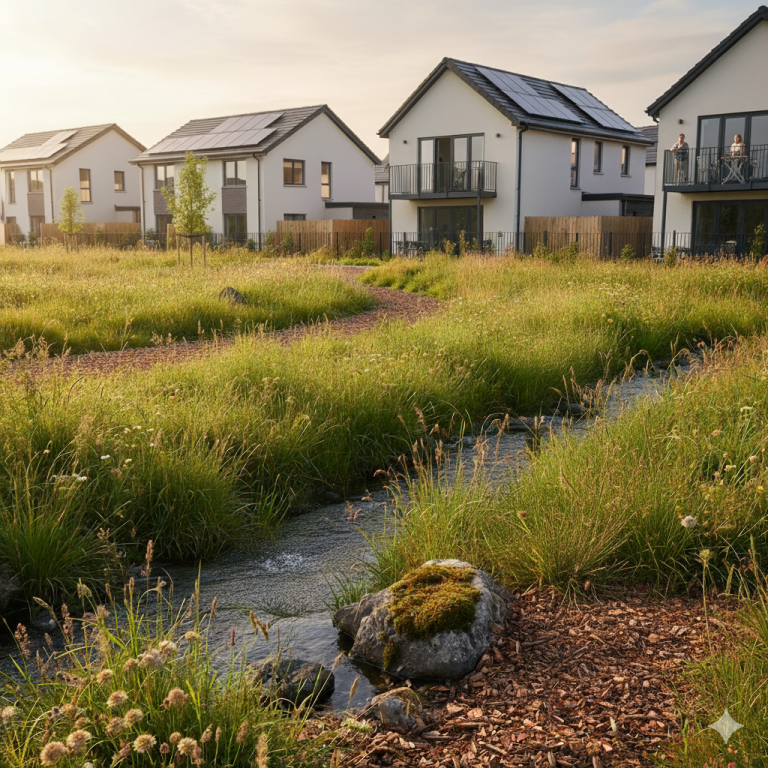
On-Site BNG Measures
Wherever feasible, on-site delivery is preferred. Biodiversity can be increased by:
Enhancing or restoring existing habitats, and/or
Creating new habitats within the red line.
Ecologists apply the mitigation hierarchy to maximise on-site gains:
Avoid impacts as the first priority;
Minimise/mitigate unavoidable impacts;
Compensate for any residual losses with high-quality, strategically placed habitat creation.
The objective is to generate sufficient biodiversity units on site to meet the required uplift.
Off-Site BNG Measures
If on-site delivery cannot meet the target, off-site gains can be secured. This is often arranged through registered habitat banks where land managers create or enhance habitats on behalf of developers to supply the required off-site biodiversity units.
Because BNG must be maintained for a minimum of 30 years, a legal agreement (e.g., a conservation covenant or similar mechanism) is used to secure the works and management. Where further units are still needed as a last resort, developers can purchase statutory biodiversity credits approved by government. These credits represent habitat outcomes delivered elsewhere and should only be used when on-site and conventional off-site options are demonstrably insufficient.
Statutory Biodiversity Metric Calculations
The statutory biodiversity metric (developed by DEFRA/Natural England) allows consultants to measure the baseline biodiversity value and compare it with the predicted post-development value. The metric converts survey data into biodiversity units using factors such as habitat type, condition, distinctiveness and other parameters.
By comparing pre- and post-development values, the ecological team can identify any shortfall and design measures to close the gap and achieve the minimum 10% net gain.
BNG Assessments, Plans and Reports
To meet Biodiversity Net Gain requirements, projects typically need a suite of assessments and documents. Depending on the site, these may include:
Biodiversity Net Gain Survey
Ecologists survey all habitats within the red-line boundary, noting protected species, invasive non-native species, and linear features (e.g., hedgerows, rivers, streams). The pre-development biodiversity value is derived from verified evidence; the post-development value is modelled using the proposed design to reflect likely impacts and enhancements.
BNG Plan and BNG Report
Often combined in one submission:
A BNG Plan sets out the strategy to achieve net gain—how impacts are avoided, how habitats are retained/enhanced/created, any off-site units, landscape proposals, and links to green infrastructure. It follows the mitigation hierarchy and considers strategic significance. It also addresses interactions with protected sites (e.g., SSSI, SAC, SPA, Ramsar) or local plan designations.
A BNG Report presents the survey results, metric outputs, and the evidence base for pre- and post-development values. Together, the plan and report provide the LPA with the information needed to make an informed planning decision.
Biodiversity Gain Plan (Statutory Template)
Separate from the project’s BNG Plan/Report, some LPAs will require the statutory Biodiversity Gain Plan (government template). This document compiles project details, metric evidence, and delivery/management arrangements. As BNG becomes standard, more authorities are likely to request this formal Biodiversity Gain Plan for approval.
Habitat Management and Monitoring Plan (HMMP)
BNG outcomes must be maintained for 30 years. An HMMP sets out the management prescriptions, monitoring regime, and reporting needed to ensure habitats are sustained at the target condition. Most habitat types relevant to BNG will require an HMMP, typically excluding sealed surfaces or similar features that do not need ongoing ecological management.
Other Supporting Assessments
Depending on site context and policy, additional studies may support BNG compliance, such as:
River Condition Assessment (RCA) for watercourses;
Protected species surveys where species are likely to be present;
Nutrient neutrality solutions/credits in catchments where required.
Biodiversity Net Gain Principles (CIEEM)
Guidance from the Chartered Institute of Ecology and Environmental Management (CIEEM) sets out good-practice principles to deliver robust, defensible BNG. In summary, projects should:
Apply the mitigation hierarchy to minimise biodiversity impacts.
Avoid/eradicate unoffsettable negative impacts.
Engage stakeholders throughout pre- and post-development stages.
Understand and manage risks and uncertainties in achieving BNG.
Select secure, appropriate mechanisms to deliver lasting gains.
Aim for best-possible ecological outcomes, not box-ticking.
Provide nature conservation benefits beyond the bare minimum.
Focus on long-term environmental gains and resilience.
Integrate sustainability across environmental, social and economic factors.
Report transparently on methods, decisions and outcomes.
For a full explanation, see CIEEM’s published BNG principles.
Why Is Biodiversity Important?
Biodiversity underpins healthy ecosystems and resilient communities worldwide. Its benefits are wide-ranging and directly relevant to everyday life and the economy:
Essential resources: Supports the production of raw materials and food, sustaining agriculture and wider supply chains.
Natural beauty & place-making: Enhances the visual quality of landscapes and developments, improving quality of life.
Scientific understanding: Provides living systems that help us advance knowledge, innovation and environmental management.
Recreation & wellbeing: Enables outdoor activities such as birdwatching, hiking, camping and fishing—boosting mental and physical health.
Jobs & local economies: Sustains employment in farming, land management, conservation, eco-tourism and nature-based services.
Life-support systems: Contributes to clean air and water through processes like carbon storage, filtration, pollination and nutrient cycling.
Because biodiversity is so vital, Biodiversity Net Gain (BNG) provides a structured, regulated framework to protect and enhance nature through development. By improving and creating habitats, projects can meet the BNG condition and proceed—while leaving the environment in a measurably better state than before.
Why Was Biodiversity Net Gain (BNG) Introduced?
As part of the UK’s move to strengthen domestic environmental policy, BNG was introduced to embed measurable nature recovery into the planning system. Since BNG took effect, architects, developers, landowners and planning consultants must consider BNG as a core component of planning applications.
BNG sits within a wider policy package (including the Environment Act 2021) aimed at tackling biodiversity decline and delivering long-term, place-based environmental improvements. By requiring developments to achieve a net positive outcome for nature, BNG helps to secure:
Cleaner air and water through restored and well-managed habitats.
Greener, healthier places with accessible natural spaces.
Stronger local economies supported by attractive, nature-rich environments.
Resilient landscapes that can better adapt to climate pressures.
BNG is widely supported by organisations and stakeholders across the sector, including Natural England, CIEEM, DEFRA, and local Wildlife Trusts, as well as local authorities and communities.
Key Legislation and Policy Context for BNG
BNG interacts with (and is supported by) a range of UK legislation and planning mechanisms, including:
Environment Act 2021 (BNG duty and related provisions)
The Conservation of Habitats and Species Regulations 2017
The Natural Environment and Rural Communities (NERC) Act 2006
The Town and Country Planning Act 1990
The Wildlife and Countryside Act 1981
Delivery is also shaped by local development plans, planning obligations (e.g., s106 agreements), Local Nature Recovery Strategies (LNRS), and other relevant national and local planning policies and guidance.
In short: Biodiversity is essential to life, livelihoods and place quality. Biodiversity Net Gain (BNG) ensures development actively contributes to nature’s recovery—setting clear, measurable expectations so projects can proceed responsibly, compliantly and nature-positive.