
Biodiversity Net Gain Assessment in Derbyshire
Delivering expert biodiversity net gain assessments in Derbyshire
Full Membership
Fully Licenced

Fully Insured

ICO Compliant
We're your friendly BNG Specialists
serving clients across Derbyshire & beyond.
If you’re developing a site in Derbyshire, obtaining a Biodiversity Net Gain (BNG) assessment is crucial. With the Environment Act 2021 now in effect, adhering to mandatory biodiversity net gain regulations is essential for securing planning permission and aligning with local planning authorities’ policies. A comprehensive BNG assessment helps avoid costly delays in your planning application process and ensures compliance with statutory biodiversity requirements.
At The BNG Guy, we specialise in delivering high-quality biodiversity net gain assessments throughout Derbyshire. Our expertise ensures that your project is aligned with national regulations as set by Natural England and DEFRA. We simplify the complexities of biodiversity regulations, including the statutory biodiversity metric, to create a clear and actionable strategy for your development.
Our biodiversity net gain assessment involves a thorough evaluation of the existing ecological value of your site, taking into account key habitat types found in Derbyshire, such as species-rich grassland, hedgerows, lowland woodland, wetlands, and river corridors. We identify meaningful biodiversity enhancements and opportunities for on-site habitat creation that will significantly increase biodiversity value and foster long-term ecological resilience.
Throughout the assessment process, we prepare all necessary documentation to meet the validation standards set by Derbyshire’s planning authorities, including Derbyshire County Council and individual district councils. Our experienced team of ecologists will guide you through the impact assessment, quantify potential biodiversity losses, and develop effective mitigation and compensation measures as required. This ensures your planning application meets all biodiversity gain conditions.
We understand the significance of preserving Derbyshire’s diverse landscapes—from the stunning Peak District National Park to the rich lowland farmland—and the essential role that sustainable development plays in this effort. By utilising the DEFRA biodiversity metric, we provide accurate and measurable pathways to achieve biodiversity net gain and secure planning consent.
Whether you’re a developer, landowner, or planning consultant, our Derbyshire-focused BNG services ensure that your project not only meets statutory requirements but also makes a positive contribution to the natural environment. This includes enhancing habitats, creating wildlife corridors, and promoting long-term ecological stewardship. Engage with us to ensure your development leaves the natural environment in a measurably better state.
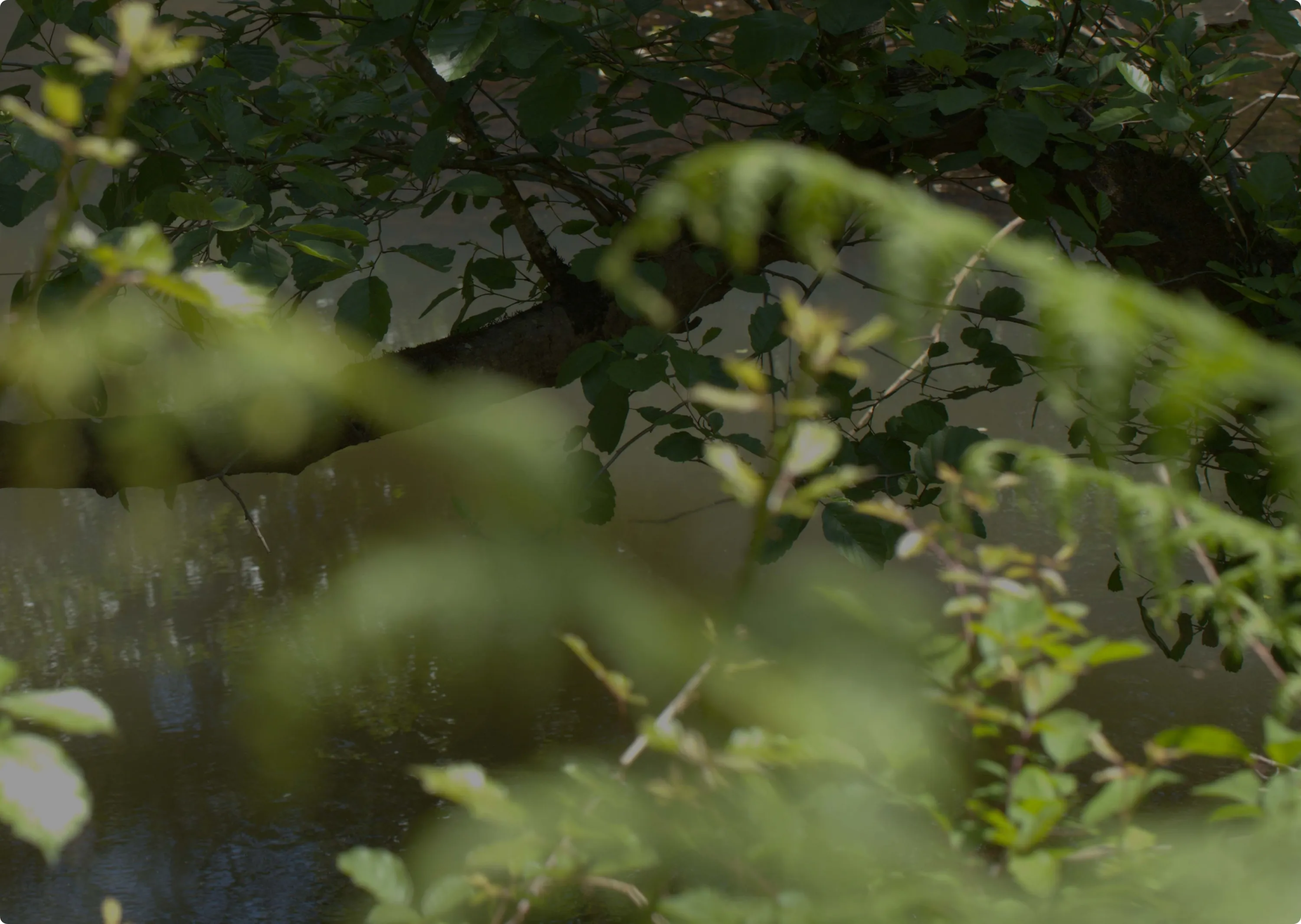
What is Biodiversity Net Gain?
Learn more about Biodiversity Net Gain (BNG) and the laws & legislations that define it.
Understanding Your BNG Assessment Derbyshire: Your Local Guide to Biodiversity Net Gain
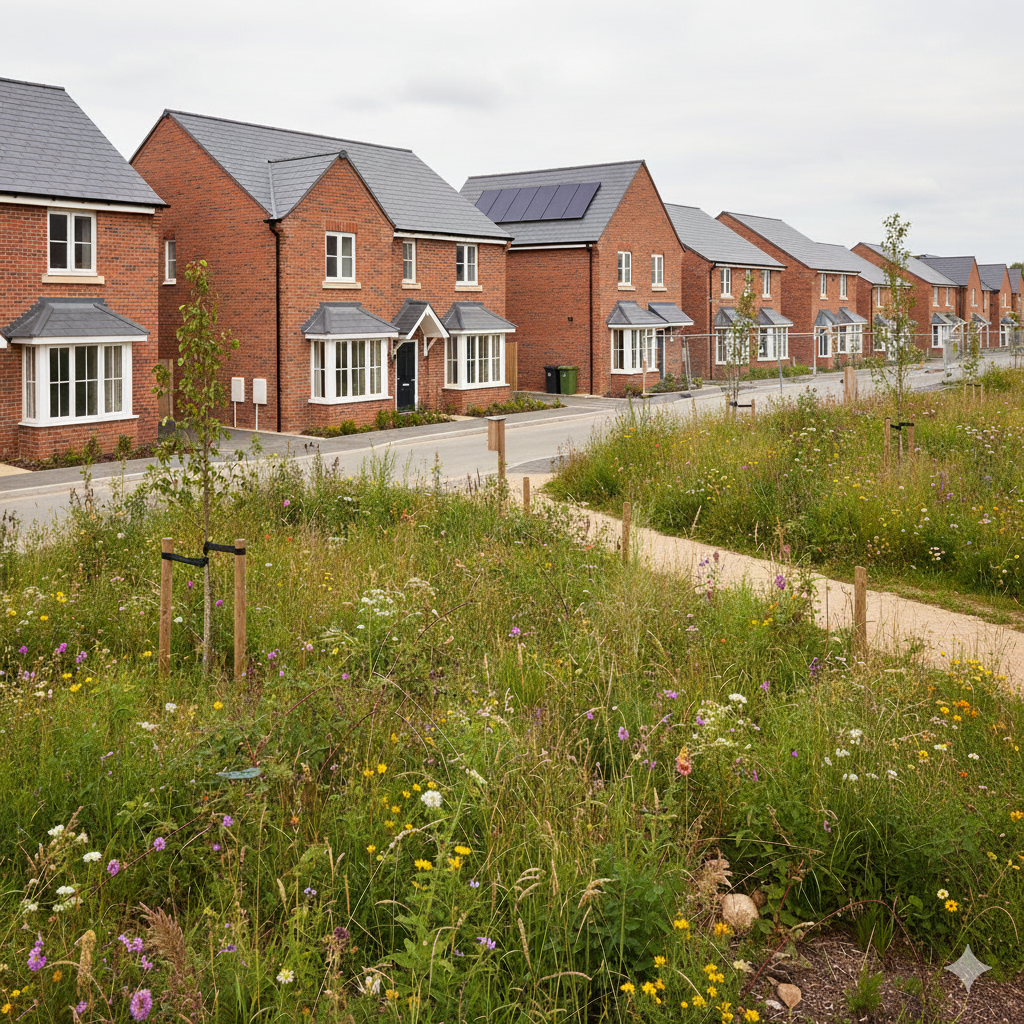

Fully Accredited
We’re fully accredited, licenced and insured. Our experienced ecologists are full members of CIEEM, licenced by Natural England and are covered by comprehensive insurances.
Fast & Reliable

Recommended
100% Success
Understanding the Importance of BNG Assessment in Derbyshire
The Biodiversity Net Gain (BNG) requirement was introduced through the Environment Act 2021, mandating that numerous development projects must achieve a quantifiable increase in biodiversity value. This shift emphasizes the necessity for developers to prioritize ecological considerations in their planning and execution.
In Warwickshire, the local authorities, particularly Warwickshire County Council, have taken the lead in implementing BNG assessments. They have set a benchmark for higher standards, requiring a 20% increase in biodiversity value, surpassing the national baseline of 10%. This proactive approach reflects the region’s commitment to environmental sustainability and biodiversity enhancement.
Failure to provide a credible BNG assessment and corresponding biodiversity plan can lead to significant risks, including planning refusals or delays. It is crucial for developers to understand that without this assessment, their projects may face substantial hurdles in the approval process.
A thorough BNG assessment is essential for determining the existing biodiversity value of a site before development. It allows for accurate predictions of the biodiversity value post-development and helps identify areas where enhancements or off-site contributions are necessary. This assessment not only aids in compliance with regulations but also supports the broader goal of promoting biodiversity in Warwickshire.
FAQs About BNG Assessments in Derbyshire
Is Biodiversity Net Gain mandatory in Derbyshire?
Yes, biodiversity net gain (BNG) is now a mandatory requirement across England, including Derbyshire, under the Environment Act 2021. All major developments in Derbyshire must demonstrate biodiversity net gain through a thorough biodiversity net gain assessment, which has been required since February 2024, with most smaller sites following suit beginning in April 2024. Local planning authorities in Derbyshire, including the Derbyshire County Council, necessitate a compliant biodiversity net gain assessment as part of any valid planning application. This assessment aims to ensure that new development leaves the natural environment in a measurably better state, enhancing biodiversity value through the implementation of a biodiversity gain plan that addresses habitat creation and management. The statutory biodiversity metric calculations will be used to quantify biodiversity units, ensuring that development projects deliver biodiversity net gain and align with local nature recovery strategies.
Which Derbyshire councils require BNG assessments?
Every local planning authority in Derbyshire is mandated to implement Biodiversity Net Gain (BNG) assessments as part of their planning processes. This includes key councils such as:
- Derbyshire County Council
- South Derbyshire District Council
- Amber Valley Borough Council
- Chesterfield Borough Council
- Derby City Council
- High Peak Borough Council
- North East Derbyshire District Council
- Erewash Borough Council
Each local planning authority (LPA) in Derbyshire follows its own validation checklist for applications for planning permission; however, all of them require a statutory biodiversity metric and a supporting Biodiversity Net Gain Plan. This plan must outline how new developments will deliver biodiversity net gain, ensuring that the overall biodiversity value is enhanced in the area.
As the Environment Act 2021 comes into full effect, starting from April 2024, projects will need to demonstrate an increase in biodiversity through appropriate habitat creation and management strategies. This is particularly important for major developments, which are expected to provide a minimum mandatory 10% biodiversity net gain. Developers must prepare a biodiversity gain condition that details how they intend to leave the natural environment in a measurably better state for at least 30 years.
In addition to on-site biodiversity enhancements, off-site biodiversity units may be considered to meet the requirements set forth by the local planning authorities. This approach is essential for creating new habitats and ensuring long-term habitat management and monitoring plans are in place, allowing for effective nature recovery strategies.
To facilitate the implementation of biodiversity net gain, it is crucial for developers to engage with Derbyshire’s local nature recovery initiatives and align their projects with the statutory biodiversity metric calculations. This will ensure compliance with the Town and Country Planning Act and contribute positively to the region’s green infrastructure.
What does a Biodiversity Net Gain Assessment in Derbyshire involve?
A comprehensive Biodiversity Net Gain (BNG) assessment in Derbyshire is essential for ensuring that new developments align with local and national biodiversity goals. This assessment, which is a requirement under the Environment Act 2021 and the Town and Country Planning Act, aims to deliver measurable improvements in biodiversity value, making a significant contribution to nature recovery strategies.
- A detailed baseline habitat survey, often utilizing UKHab mapping, to establish the pre-development biodiversity conditions.
- Calculations using the Biodiversity Metric 4.0/4.1 to quantify biodiversity units and assess potential impacts on local habitats.
- A thorough impact assessment of the proposed development to evaluate its effects on statutory biodiversity and local ecosystems.
- Proposals for habitat creation and enhancement that aim to leave the natural environment in a measurably better state.
- A robust 30-year management and monitoring strategy to ensure ongoing biodiversity gains through effective land management practices.
- Comprehensive BNG planning documentation tailored for submission to local planning authorities, including plans for both on-site and off-site biodiversity net gain initiatives.
In Derbyshire, it is critical for developers to understand the implications of biodiversity gain conditions and to submit applications for planning permission that meet the mandatory requirements, including the statutory biodiversity metric calculations. The district council and Derbyshire County Council play key roles in reviewing these assessments to ensure compliance and promote biodiversity enhancements across new developments.
With the upcoming changes in planning policies set for April 2024, it is more important than ever for developers to integrate biodiversity net gain principles into their projects. This includes exploring options for off-site biodiversity units, utilizing biodiversity credits, and ensuring that their biodiversity gain plan must contribute positively to local habitat management and monitoring initiatives.
By focusing on creating new habitats and enhancing existing ones, developers can help achieve an overall increase in biodiversity while also meeting the expectations of local planning authorities and the community. Engaging in biodiversity net gain assessments in Derbyshire is not just a regulatory requirement; it is an opportunity to contribute to the sustainable development goals that aim to leave a lasting positive impact on our natural environment.
How Long Does a Biodiversity Net Gain Assessment Take in Derbyshire?
On average, a Biodiversity Net Gain (BNG) assessment in Derbyshire takes approximately 2 to 4 weeks. The duration can vary based on several factors, including:
- Site size
- Habitat complexity
- Seasonal survey constraints
- Level of redesign required to achieve the mandatory 10% biodiversity gain
It is important to note that urgent biodiversity net gain assessments can sometimes be completed more quickly if site information is readily available. This assessment is a crucial component of the planning application process, particularly under the Environment Act 2021, which mandates local planning authorities to ensure that new developments not only comply with statutory biodiversity metrics but also contribute positively to the natural environment.
In Derbyshire, implementing biodiversity net gain requires careful consideration of biodiversity value and the creation of new habitats. Developers must provide a biodiversity gain plan that details how they will leave the natural environment in a measurably better state post-development. This may involve on-site enhancements or off-site biodiversity units, depending on the specific requirements set forth by the local planning authorities and district council.
As we approach February 2024, it is essential for developers, including those engaged in self-build projects, to understand the implications of the new biodiversity regulations. A comprehensive habitat management and monitoring plan must accompany applications for planning permission to ensure compliance with the biodiversity gain condition. The focus is on increasing biodiversity and delivering biodiversity net gain within the framework of local nature recovery strategies and green infrastructure initiatives.
Ultimately, the goal is to create a sustainable balance between development and nature recovery, ensuring that all major developments contribute to the long-term enhancement of Derbyshire’s rich biodiversity.
Can I Achieve the 10% Biodiversity Net Gain Requirement On-Site in Derbyshire?
Often, yes, but it depends on the development footprint and the type of habitat involved. To ensure compliance with the statutory biodiversity net gain (BNG) requirements set by the Environment Act 2021, developers must assess their projects carefully. In Derbyshire, where biodiversity net gain assessments are a crucial part of the planning application process, several options are available:
- Off-site habitat creation on land you control or elsewhere, ensuring that biodiversity enhancements contribute to local nature recovery strategies.
- Purchasing biodiversity units from local habitat banks, which provide a means to meet the mandatory 10% biodiversity gain condition for new developments.
The BNG Guy specializes in guiding clients through the complexities of biodiversity metric calculations to determine the best approach for delivering biodiversity net gain within their projects. Whether you are involved in major development, self-build projects, or applications for planning permission, understanding the implications of the statutory biodiversity metric is essential for meeting the local planning authorities’ requirements in Derbyshire.
Additionally, creating new habitats and implementing effective land management strategies are vital for achieving a measurable increase in biodiversity. This not only aids in compliance with the Town and Country Planning Act but also aims to leave the natural environment in a measurably better state for at least 30 years. For those considering developments within the Peak District National Park or other areas in Derbyshire, making informed decisions about biodiversity gain plans will be crucial to the success of your planning applications.
What happens if my site is close to a sensitive area, like the Peak District?
In Derbyshire, conducting a Biodiversity Net Gain Assessment is crucial for ensuring that new developments contribute positively to local ecosystems. With the implementation of the Environment Act 2021, all planning applications must demonstrate how they will deliver biodiversity net gain (BNG), aiming to leave the natural environment in a measurably better state. This statutory requirement, effective from April 2024, mandates a minimum of 10% biodiversity gain on-site or through off-site biodiversity units, as part of the local planning authorities’ obligations.
The Biodiversity Metric is an essential tool for calculating biodiversity value and determining biodiversity credits. Developers must prepare a Biodiversity Gain Plan that outlines their strategy to enhance habitats, which may include creating new habitats or improving existing ones. The plan must be integrated into the planning permission process, ensuring compliance with the Town and Country Planning Act.
In Derbyshire, particularly near sensitive ecological areas such as the Peak District National Park, ancient woodlands, and local wildlife sites, early ecological input is vital. The Derbyshire County Council emphasizes the importance of tailored biodiversity assessments to address these sensitivities. Measures must be in place to avoid disruptions to natural habitats and enhance the overall biodiversity of the region.
For major developments, it is essential to establish a habitat management and monitoring plan that outlines the long-term strategies for biodiversity enhancement, ensuring that improvements are maintained for at least 30 years. This proactive approach not only supports local nature recovery strategies but also aligns with central government objectives for biodiversity recovery.
When submitting applications for planning permission in Derbyshire, developers are encouraged to collaborate with local planning authorities to ensure that their biodiversity net gain assessments meet all necessary criteria. This collaboration is key to delivering biodiversity net gain within the framework of statutory biodiversity metrics, ultimately contributing to the sustainability of Derbyshire’s natural environment.
Do Small Residential Developments in Derbyshire Require Biodiversity Net Gain Assessment?
In Derbyshire, the implementation of Biodiversity Net Gain (BNG) is becoming increasingly crucial in the context of new developments. As stipulated by the Environment Act 2021, most small sites are now mandated to undergo a biodiversity net gain assessment unless they are fully exempt based on statutory criteria. This means that even minor residential projects must consider their impact on local biodiversity and demonstrate how they will enhance the natural environment.
Local planning authorities, including Derbyshire County Council and district councils, are keen to ensure that any planning application aligns with the aims of increasing biodiversity. Even in cases where exemptions may apply, councils often request comprehensive biodiversity information to support local policy objectives. This aligns with the statutory biodiversity metric that helps calculate the biodiversity value and ensures that any development contributes positively to local ecosystems.
For developers, understanding the requirements for a biodiversity gain plan is essential. A well-prepared biodiversity net gain assessment will not only address the mandatory 10% increase in biodiversity but will also outline habitat management and monitoring plans that will sustain biodiversity enhancements for a minimum of 30 years. This includes creating new habitats and improving existing ones, ensuring that the overall biodiversity in Derbyshire is left in a measurably better state post-development.
With the upcoming changes in April 2024, it is important for developers to stay informed about the evolving requirements associated with biodiversity credits and statutory biodiversity metrics. Engaging with local nature recovery strategies and the peak district national park initiatives can further support the delivery of biodiversity net gain within planning conditions. Ultimately, the goal is to create a harmonious balance between development and nature recovery, ensuring that every new development in Derbyshire contributes to the enhancement of our vital natural habitats.
What Documents Do I Need to Submit for Biodiversity Net Gain Assessment in Derbyshire?
When applying for planning’s requirement for Biodiversity Net Gain (BNG) in Derbyshire, it’s essential to prepare specific documentation to ensure compliance with planning authorities and local council requirements. Typically, the following documents are needed:
- Statutory Biodiversity Metric Spreadsheet: This document is crucial for calculating biodiversity units and demonstrating how the proposed development will achieve a net gain in biodiversity.
- UKHab Baseline Map: A comprehensive map that outlines existing habitats and biodiversity value before any development occurs.
- Post-development Habitat Map: This map illustrates the anticipated state of habitats following development, highlighting enhancements and habitat creation efforts.
- Biodiversity Net Gain Plan/Statement: A detailed plan outlining how the proposed development will deliver measurable biodiversity net gain, in accordance with the Environment Act 2021 and local planning policies.
- Long-term Habitat Management and Monitoring Plan (HMMP): A strategic plan that ensures ongoing habitat management and monitoring for at least 30 years post-development, aimed at maintaining and enhancing biodiversity.
At our firm, we specialise in delivering comprehensive biodiversity net gain assessments in Derbyshire, ensuring that all aspects of your planning application meet the necessary requirements for biodiversity gain. Our services include assistance with biodiversity metric calculations, habitat management plans, and strategies for creating new habitats that align with local nature recovery objectives.
Can you help redesign my layout if the project fails to reach the mandatory 10% biodiversity net gain (BNG) in Derbyshire?
Yes, we provide comprehensive support to developers and planners in Derbyshire by offering expert advice on layout adjustments, landscape changes, and habitat enhancements. Our goal is to help you achieve the required biodiversity net gain target without compromising the viability of your project. Whether you are navigating the complexities of planning applications or ensuring compliance with the statutory biodiversity metric as outlined in the Environment Act 2021, our team is equipped to assist you. We understand the importance of delivering biodiversity net gain within your development, be it a major development or a self-build project. Our strategies include creating new habitats and implementing effective habitat management and monitoring plans to ensure an increase in biodiversity value on-site. We also guide you through the process of applying for planning permission while adhering to local planning authority requirements, ensuring that your biodiversity gain plan is robust and meets the expectations of the Derbyshire County Council. By focusing on nature recovery and utilizing biodiversity credits, we can help you achieve a measurably better state for the natural environment in Derbyshire while complying with the town and country planning act. Let us assist you in leaving the natural environment in a measurably better condition for at least 30 years, aligning your project with the local nature recovery strategies and enhancing the overall biodiversity of the area.
What is Biodiversity Net Gain Assessment in Derbyshire and Why It Matters
Biodiversity Net Gain (BNG) is an essential legal requirement established under the Environment Act 2021, mandating developers to enhance the natural environment, ensuring it is left in a “measurably better state” post-development. In Derbyshire, this requirement applies to various planning applications, particularly major developments starting from February 2024, with many smaller sites also affected from April 2024. Developers must demonstrate a minimum of 10% biodiversity gain through comprehensive biodiversity metric calculations using the statutory biodiversity metric.
Implementing a robust biodiversity net gain assessment in Derbyshire is crucial for both compliance and environmental stewardship. The local planning authorities, including the Derbyshire County Council, require that all applications for planning permission incorporate a biodiversity gain plan that outlines how the project will deliver biodiversity net gain. This includes creating new habitats, enhancing existing natural habitats, and managing biodiversity through a habitat management and monitoring plan.
For developers, understanding the intricacies of the biodiversity metric is vital. It involves calculating biodiversity units to ensure that the planning authority can assess the biodiversity value of the site before and after development. The goal is to achieve an increase in biodiversity that benefits the local ecosystem, supports nature recovery strategies, and aligns with the aims of the Town and Country Planning Act.
At The BNG Guy, we specialise in guiding landowners, developers, and planning teams in Derbyshire through the complexities of biodiversity net gain assessments. We help ensure compliance with local and statutory requirements, enabling projects to deliver biodiversity enhancements that not only meet regulatory conditions but also contribute positively to the natural environment for at least 30 years. Our expertise extends to managing biodiversity credits and exploring off-site biodiversity net gain opportunities, ensuring every project leaves a lasting positive impact on Derbyshire’s rich biodiversity.
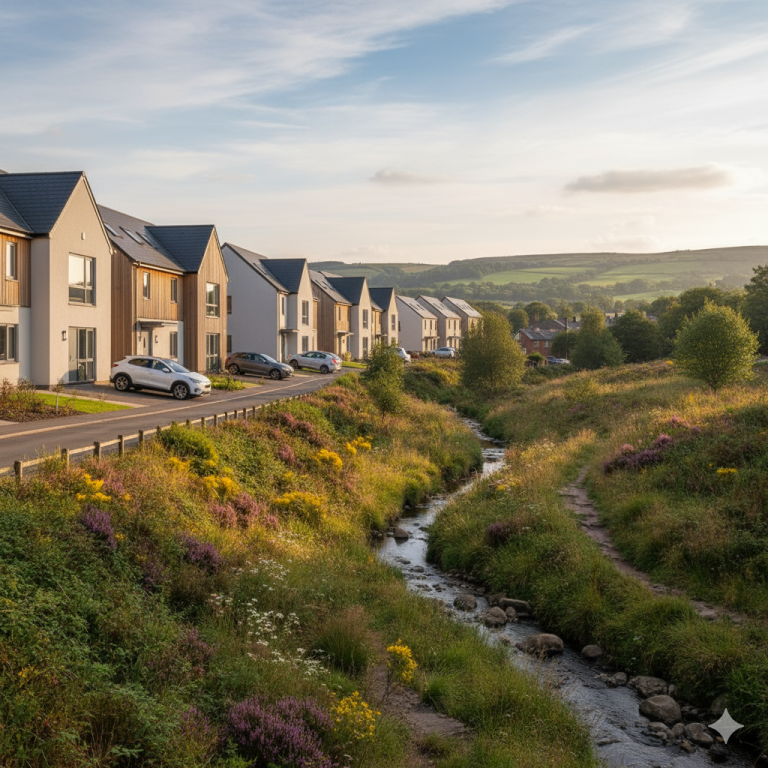
Local Policy & Planning Context for Biodiversity Net Gain Assessment in Derbyshire
- Key local authorities in Derbyshire, including district councils and the county council, recognise and embed the mandatory Biodiversity Net Gain (BNG) requirement in their planning guidance. This aligns with the provisions of the Environment Act 2021, which emphasizes the importance of delivering biodiversity net gain within new development projects.
- Biodiversity Net Gain assessments in Derbyshire must consider not only the baseline biodiversity value of habitats on-site but also the broader local nature recovery objectives. For instance, the forthcoming Local Nature Recovery Strategy (LNRS) for Derbyshire is highlighted in local planning documents, ensuring that biodiversity gains are integrated into planning applications.
- All developments must adhere to the mitigation hierarchy (avoid → minimise → compensate) while achieving BNG. This means that developers cannot simply offset biodiversity losses without first attempting to avoid harm to natural habitats. The planning authority will require a comprehensive biodiversity gain plan that outlines how the project will deliver measurable biodiversity enhancements in accordance with local planning policies.
- To comply with local planning authorities, any application for planning permission must include a biodiversity metric calculation that assesses the pre-development biodiversity value and outlines a strategy for achieving a post-development biodiversity value that is in a measurably better state. This includes creating new habitats and ensuring that biodiversity gain condition is met for at least 30 years.
- With the implementation of statutory biodiversity metrics, developers will need to demonstrate how they can deliver biodiversity net gain through both on-site and off-site biodiversity units. This could involve habitat creation, restoration, and long-term habitat management and monitoring plans to ensure that the natural environment is left in a better state.
- As part of the planning condition, the council may also require developers to contribute to off-site biodiversity enhancements, such as biodiversity credits, to support local nature recovery initiatives. This is crucial for major development projects, especially in sensitive areas like the Peak District National Park.
- By integrating biodiversity net gain assessments into all stages of the planning process, Derbyshire aims to enhance its natural environment while meeting the mandatory 10% biodiversity gain requirement set by central government.
What our Biodiversity Net Gain Assessment Service Includes in Derbyshire
At The BNG Guy, our comprehensive Biodiversity Net Gain (BNG) Assessment service for Derbyshire encompasses the following crucial elements:
Baseline Ecological Survey – We conduct a thorough habitat classification and mapping exercise (Phase 1 plus habitat condition assessment) to establish the pre-development biodiversity value, ensuring compliance with the Environment Act 2021 and local planning requirements.
Biodiversity Metric Calculation – Utilizing the latest version of the statutory biodiversity metric (e.g., Defra Biodiversity Metric 4.0 or later), we calculate existing biodiversity units and forecast the post-development biodiversity value, aligning with the mandatory 10% net gain requirement.
Impact Assessment & Gap Analysis – Our team evaluates how the proposed development impacts biodiversity, identifies potential losses and gains, and assesses whether the biodiversity gain condition of at least 10% will be achieved in accordance with local planning authorities’ expectations.
BNG Strategy & Delivery Plan – We develop a detailed biodiversity gain plan that may include on-site habitat creation and enhancement (such as woodland, wildflower meadows, and enhanced hedgerows), off-site biodiversity units provision, or purchase of biodiversity credits from a habitat bank to ensure adherence to the statutory biodiversity requirements.
Securing and Monitoring – We advise on securing management for a minimum of 30 years (or as required by Derbyshire County Council) and establish monitoring and reporting protocols to ensure the long-term success of biodiversity enhancements.
Planning Application Support – We assist in preparing the BNG section of your planning application documentation, including biodiversity metric calculations, habitat maps, and BNG statements. We can also participate in pre-application meetings to facilitate smooth communication with the planning authority.
Why Choose The BNG Guy for Your Biodiversity Net Gain Assessment in Derbyshire
- Local Knowledge – Our team possesses a deep understanding of the unique ecology, habitats, and planning policy context of Derbyshire, including the Peak District, lowland wetlands, woodlands, and hedgerows. This expertise ensures that your biodiversity net gain assessment aligns with local statutory biodiversity requirements, enhancing your application’s success.
- Tailored for Your Project Scale – Regardless of whether you’re engaging in a small residential project or a major development, we customize our approach to fit your specific needs. Our biodiversity gain plans are designed to facilitate planning permission processes while ensuring compliance with the Environment Act 2021.
- Clear Deliverables – You will receive a concise and easy-to-understand biodiversity net gain (BNG) plan that meets the validation requirements set by local planning authorities in Derbyshire. Our biodiversity metric calculations will help you quantify the biodiversity value and ensure you deliver biodiversity net gain effectively.
- Risk Management – Inadequate biodiversity net gain documentation can lead to planning delays and increased costs. We assist you in identifying and mitigating these risks at an early stage, ensuring that your planning application adheres to the statutory biodiversity metric and other local planning regulations.
- Value for Money – Early preparation of your biodiversity gain plan often leads to a smoother planning process, avoiding unexpected issues later on. Our expertise in habitat management and monitoring plans ensures that you are on track to deliver measurable biodiversity enhancements over the long term, with an aim to leave the natural environment in a measurably better state.
Typical Process & Timeline for Biodiversity Net Gain Assessment in Derbyshire
| Stage | What happens | Typical timeframe* |
|---|---|---|
| 1. Brief & site info | You provide site plans and proposals, and we assess the scope for biodiversity net gain (BNG) compliance under the Environment Act 2021. | 1 week |
| 2. Site survey | An ecologist visits the site to evaluate habitats and species context, ensuring alignment with local planning authorities’ requirements. | 1–2 weeks |
| 3. Metric calculation & strategy draft | We conduct biodiversity metric calculations to establish baseline and post-development values, and draft a biodiversity gain plan to enhance habitats. | 1–2 weeks |
| 4. Client review & final plan | You review the draft, and we finalize the biodiversity net gain assessment plan, issuing all necessary documents for your planning application. | 1 week |
| 5. Post-consent delivery (if required) | Habitat creation and enhancements are implemented, with monitoring beginning to ensure compliance with the biodiversity gain condition. | As agreed |
* Timings depend on seasonality, size and complexity of the site, presence of protected species, or irreplaceable habitat. Implementing biodiversity net gain is essential for new developments in Derbyshire to leave the natural environment in a measurably better state, especially with upcoming regulations in February 2024. Local planning authorities, including Derbyshire County Council, will require a comprehensive biodiversity assessment to deliver biodiversity net gain, which may involve on-site and off-site biodiversity units, habitat management, and monitoring plans for at least 30 years.
Key Considerations for Biodiversity Net Gain Assessment in Derbyshire
- If your site lies within or adjacent to ecologically sensitive landscapes, such as the Peak District National Park, ancient woodlands, or Local Wildlife Sites, early ecological input is essential for a successful biodiversity net gain (BNG) assessment.
- The on-site delivery of biodiversity net gain is often preferred, as it may be more cost-effective than pursuing off-site biodiversity units or purchasing biodiversity credits.
- Long-term habitat management must be secured, typically for a minimum of 30 years, with ongoing monitoring to meet the requirements of local planning authorities (LPAs) and ensure compliance with the Environment Act 2021.
- In certain developments, utilizing a habitat bank or other off-site biodiversity units may be necessary when on-site options are limited. This approach helps meet statutory biodiversity metric calculations required for planning applications.
- It is crucial to document any baseline degradation accurately, as the biodiversity metric necessitates demonstrating the actual pre-development biodiversity value or providing explanations for any prior degradation.
Our Commitment to You
When you engage The BNG Guy for your biodiversity net gain assessment in Derbyshire, we guarantee:
- A dedicated ecological consultant with extensive experience in biodiversity net gain (BNG) within the East Midlands region.
- Transparent quotes with no hidden fees, ensuring you understand the costs associated with your biodiversity gain plan.
- Delivery of the biodiversity net gain plan in a format that seamlessly integrates with your planning application, adhering to local planning authorities’ requirements.
- Ongoing support throughout the delivery of the habitat management and monitoring plan, ensuring compliance with planning conditions and the statutory biodiversity metric.
Our aim is to help you achieve a measurable increase in biodiversity through effective habitat creation and enhancement strategies. As outlined in the Environment Act 2021, we focus on delivering biodiversity net gain that not only meets but exceeds the mandatory 10% requirement, ensuring that your new development leaves the natural environment in a measurably better state for at least 30 years.
As part of the biodiversity net gain assessment process, we will conduct thorough biodiversity metric calculations to determine the biodiversity value of your site and identify any necessary biodiversity units. This data will inform your biodiversity gain condition and help secure planning permission from the district council.
Whether your project is a major development, self-build, or an application for planning permission, we are committed to implementing biodiversity net gain strategies that align with local nature recovery strategies. Our services include both on-site and off-site biodiversity net gain options, enabling you to deliver biodiversity enhancements that contribute to the overall health of Derbyshire’s natural habitats.
Contact us today to learn how we can assist you in navigating the complexities of biodiversity net gain assessments in Derbyshire and how we can help you deliver biodiversity net gain within your upcoming projects.
Get Started with Biodiversity Net Gain Assessment in Derbyshire
If you’re planning a new development in Derbyshire and wish to comply with the biodiversity net gain (BNG) requirements, contact The BNG Guy today for a free initial discussion. Staying informed about biodiversity net gain assessments is crucial, especially with the upcoming regulations set to take effect in February 2024. Early engagement in your planning application process can help you avoid delays, unexpected costs, and planning hurdles associated with local planning authorities.
Reach out to us with your site details, and we’ll provide a tailored proposal to help you deliver biodiversity net gain within your project.
In accordance with the Environment Act 2021, all major development projects must include a biodiversity gain plan that aims to leave the natural environment in a measurably better state. The planning condition for biodiversity enhancements is mandatory, ensuring that developers create and manage habitats for at least 30 years. Our experts can assist you in conducting biodiversity metric calculations to assess your site’s biodiversity value and determine the necessary biodiversity units required for compliance with the statutory biodiversity metric.
Whether you are considering off-site biodiversity net gain options or on-site habitat creation, we can help you develop a comprehensive habitat management and monitoring plan. This plan will not only meet the requirements of the Town and Country Planning Act but will also align with the local nature recovery strategies advocated by the Derbyshire County Council. We ensure that your biodiversity gain plan must meet local planning authority standards while also exploring opportunities for biodiversity credits under the latest regulations.
Our goal is to help you navigate the complexities of planning permission applications while effectively increasing biodiversity through well-planned habitat management and enhancement strategies. Together, we can create new habitats that contribute positively to the Peak District National Park and the overall biodiversity of Derbyshire.