
Biodiversity Net Gain in Leicestershire
Delivering expert biodiversity net gain assessments across Leicestershire

Full Membership

Fully Licenced

Fully Insured

ICO Compliant
We're your friendly BNG Specialists
serving clients across Leicestershire & beyond.
If you’re developing a site in Leicestershire, you’ll need far more than a basic ecology survey. With Biodiversity Net Gain in Leicestershire now a mandatory component of the planning process, a comprehensive BNG assessment is essential to comply with local planning policies, avoid planning delays, and secure your permission with confidence.
At The BNG Guy, we specialise in delivering detailed Biodiversity Net Gain assessments across Leicestershire, ensuring your project fully aligns with the Environment Act 2021 and meets the national standards set by Natural England and DEFRA. Our expertise allows us to translate complex BNG regulations, local authority expectations, and metric requirements into a clear, actionable plan tailored to your development.
Our Biodiversity Net Gain in Leicestershire assessment process evaluates the existing ecological value of your site, taking into account the diverse habitats found across the county—including hedgerow networks, neutral and improved grasslands, fragments of ancient woodland, riparian and floodplain habitats, canal corridors, and semi-natural green spaces typical of the Leicestershire landscape. We identify realistic habitat enhancement strategies and on-site creation opportunities designed to maximise biodiversity value and support planning success.
Throughout the assessment, we guide you through each stage of the BNG process, preparing all necessary documentation required for submission. This ensures full compliance with Leicester City Council, Leicestershire County Council, and district authorities such as Charnwood, Harborough, Blaby, Hinckley & Bosworth, Melton, North West Leicestershire, and Oadby & Wigston. Our ecologists will support you in understanding habitat condition scores, calculating biodiversity units, assessing potential biodiversity loss, and designing effective mitigation measures.
We understand the unique ecological character of Leicestershire and the importance of integrating nature recovery into development. By using the statutory DEFRA Biodiversity Metric, we provide a measurable, transparent, and defensible approach to delivering Biodiversity Net Gain in Leicestershire, helping you demonstrate how your project will secure long-term environmental improvement.
Whether you are a developer, landowner, or planning consultant, our services ensure that your project not only meets strict planning requirements but also contributes positively to Leicestershire’s natural environment—supporting wildlife corridors, habitat connectivity, and long-term ecological resilience.
What is Biodiversity Net Gain?
Learn more about Biodiversity Net Gain (BNG) and the laws & legislations that define it.
What is Biodiversity Net Gain in Leicestershire?
Your Local Guide to BNG

Fully Accredited
We’re fully accredited, licenced and insured. Our experienced ecologists are full members of CIEEM, licenced by Natural England and are covered by comprehensive insurances.

Fast & Reliable

Recommended

100% Success
What is Biodiversity Net Gain in Leicestershire?
Biodiversity Net Gain in Leicestershire (BNG Leicestershire) requires that proposed development produces a measurable, overall increase in biodiversity value on or off the development site compared with the pre-development baseline. Using the statutory biodiversity metric and the completed metric calculation tool, developers and ecological consultants prepare a biodiversity net gain plan or BNG assessment as part of the planning application and planning process managed by local planning authorities, including Leicestershire County Council and district councils such as North West Leicestershire District Council.
Under the Environment Act 2021 and related planning policy and planning practice guidance, biodiversity gain is now a mandatory consideration for many development projects. Since February 2024, developers must demonstrate how they will achieve BNG, either through on-site biodiversity enhancements, off-site habitat creation or enhancement, or by purchasing biodiversity credits from registered habitat banks or the government where statutory biodiversity credits are available.
Achieving BNG involves an ecological habitat assessment showing onsite habitat existing, calculating biodiversity units using the statutory metric, and producing a biodiversity gain plan or biodiversity strategy that details mitigation, enhancement and long-term management. The plan will reference local nature recovery goals, local wildlife sites and the local biodiversity action plan to ensure benefits to local communities, accessible natural greenspace and nature conservation measures across Leicestershire and the East Midlands.
Local authorities and planning authorities expect planning applications to include a completed BNG assessment carried out by a qualified ecologist or ecological consultant, often a member of the Chartered Institute of Ecology and Environmental Management or the Institute of Ecology and Environmental Management. For major developments, and in many minor developments and small sites, the planning authority will require evidence of on-site biodiversity, off-site proposals or purchase of biodiversity credits to meet the BNG requirement. Irreplaceable habitat and irreplaceable sites remain protected: the BNG approach does not permit loss of irreplaceable habitat without exceptional justification.
The BNG planning process in Leicestershire integrates with the town and country planning act and development management procedure, ensuring that biodiversity units and habitat-based metrics inform planning permission decisions. Where on-site measures cannot deliver the required biodiversity units, developers can deliver off-site habitat enhancement or secure biodiversity credits. Biodiversity credits can be purchased to compensate for residual losses, supporting nature recovery priorities set out by Natural England and local biodiversity strategies.
Practical measures to create a biodiversity net gain in Leicestershire include habitat creation (such as hedgerow planting and wetland restoration), long-term management secured through a gain plan or biodiversity action plan, and habitat enhancement on local nature recovery networks. Ecological consultants prepare the BNG assessment and gain plan to demonstrate compliance, advising how to show onsite habitat existing, how to protect important habitats and how to manage habitats in perpetuity to deliver measurable biodiversity units.
Whether planning a small site, a major development or a minor development, developers should consult local councils and the planning authority early in the planning application process to align proposals with local planning, biodiversity strategy and Leicestershire County Council expectations. Properly applied, Biodiversity Net Gain in Leicestershire supports nature recovery, protects natural environment assets, helps meet statutory biodiversity credits and strengthens the ecological value of development projects for local communities and the wider East Midlands region.
FAQs About BNG Assessment in Warwickshire
Is a BNG assessment always required in Warwickshire?
Yes, for the majority of major developments, and increasingly for many minor projects, Warwickshire Council mandates that developers demonstrate how biodiversity net gain (BNG) has been considered and achieved. Given Warwickshire’s pioneer status in environmental initiatives, the Council is particularly stringent in its requirements.
What is the expected percentage uplift for biodiversity net gain?
While the national minimum uplift is approximately 10%, in Warwickshire, it is commonly expected that developers achieve a 20% uplift in biodiversity units as part of their BNG assessment.
What should I do if my site cannot achieve the uplift on-site?
If it’s determined that on-site solutions are not feasible, off-site enhancements or the acquisition of biodiversity credits may be necessary to compensate for the shortfall. These options will be outlined during the assessment phase.
How long does the BNG assessment process take?
The duration of the assessment process depends on various factors, including the size and complexity of the site, as well as the development stage. For a typical residential or commercial project in Warwickshire, we strive to deliver within 10 days of the site survey.
What is the cost of a BNG assessment?
Costs for a BNG assessment can vary significantly based on the scale of the project, habitat complexity, and specific client requirements. Generally, our BNG Assessment Warwickshire costs between £1200-1600 including site visit, data searches, reports and BNG Metric calculations.
What is Biodiversity Net Gain (BNG)?
Biodiversity Net Gain means development must leave biodiversity in a measurably better state than before. Using the statutory biodiversity metric produced by DEFRA (the statutory metric tool), a BNG assessment converts habitat condition and extent into biodiversity units. Developers must show through a biodiversity net gain plan (or BNG plan) how the proposed development will achieve an overall percentage gain in biodiversity units, typically secured for at least 30 years via habitat management.
BNG Legal and Policy Framework
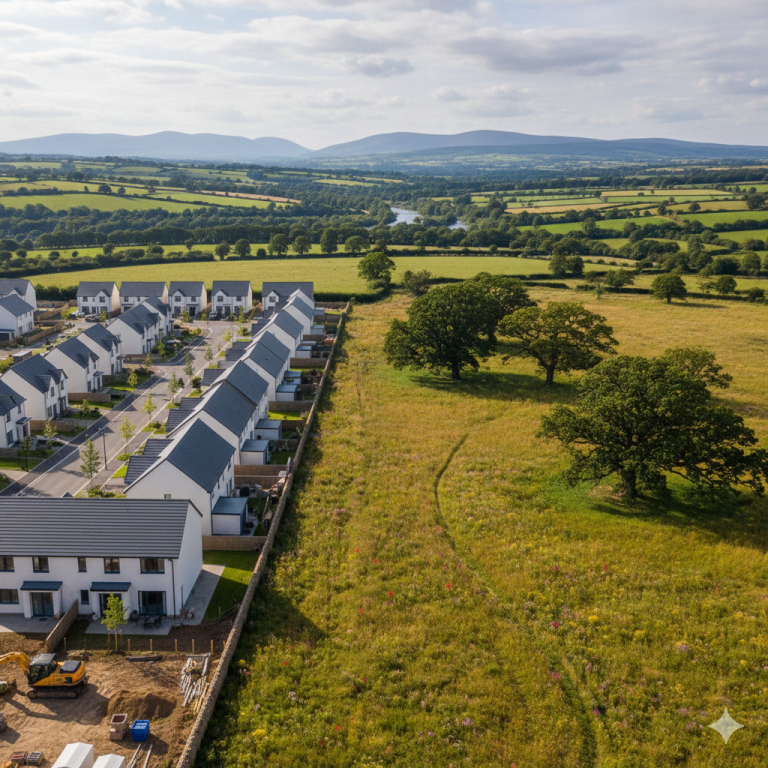
The Environment Act 2021 introduced mandatory biodiversity net gain as part of the planning process. Since February 2024 many planning applications are required to submit a completed metric calculation tool alongside other ecology reports. Local planning authorities, including Leicestershire County Council and district councils such as North West Leicestershire District Council, implement BNG through planning policy and development management procedure informed by National Planning Practice Guidance and guidance from Natural England and DEFRA.
Why BNG Matters in Leicestershire
Leicestershire’s varied natural environment — from Charnwood Forest and the River Soar floodplains to species-rich hedgerows and lowland mosaic farmland — contains important habitats and local wildlife sites that local councils seek to protect. Achieving biodiversity net gain in Leicestershire supports nature recovery, strengthens ecological connectivity, and helps meet county-level biodiversity strategy objectives. For planning authorities and developers, compliance avoids delays to planning permission and ensures alignment with Leicestershire County Council and local planning expectations.
BNG Requirements for Planning Applications
When submitting a planning application for a proposed development in Leicestershire, developers must typically provide:
- A BNG assessment using the statutory biodiversity metric
- A biodiversity net gain plan or biodiversity gain plan detailing on-site and off-site measures
- Habitat assessment and ecological surveys by a qualified ecologist or ecological consultant
- Evidence of long-term habitat management for 30 years
Where on-site measures cannot deliver the required units, the planning authority may accept off-site compensation or purchase of statutory biodiversity credits (biodiversity credits can be purchased from the government or registered habitat banks within the market where available).
BNG Process on a Development Site — Step by Step
- Pre-application advice: engage early with local planning authorities and an ecological consultant to assess constraints and opportunities.
- Ecology survey: commission habitat assessment, protected species surveys, and mapping of existing biodiversity value and irreplaceable habitat.
- Metric calculation: complete the statutory biodiversity metric to quantify baseline units and predicted post-development units.
- Biodiversity net gain plan: prepare a gain plan that sets out on-site creation, enhancement, mitigation, and long-term management measures.
- Planning submission: include the BNG assessment, biodiversity action plan elements, and management proposals with the planning application.
- Securing measures: use planning obligations, biodiversity credits, or on-site/off-site agreements to secure delivery and monitoring.
On-site vs Off-site Biodiversity Net Gain in Leicestershire
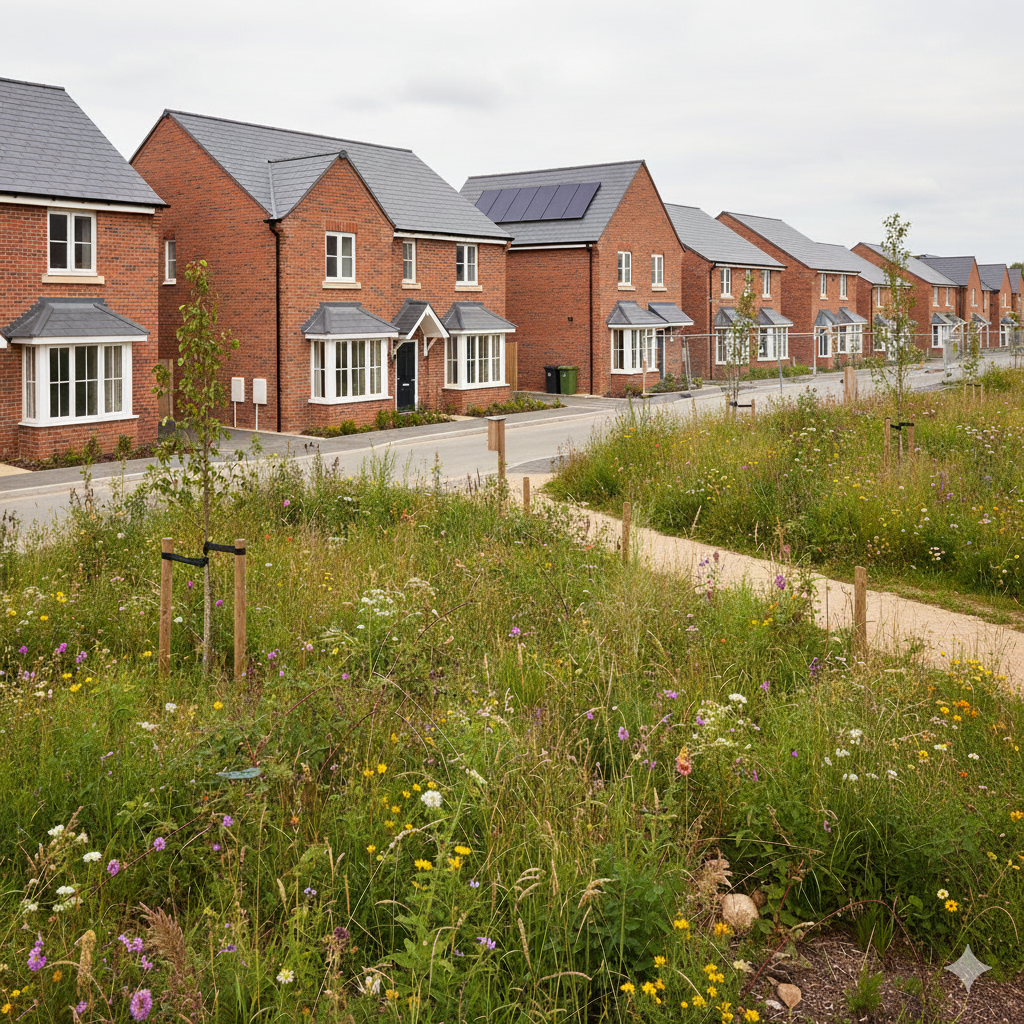
On-site biodiversity enhancement is preferred by planning practice guidance and many local authorities because it delivers local benefits and connectivity. Examples include creating wet meadow systems, restoring hedgerows, linking riparian corridors or establishing accessible natural greenspace. Where on-site delivery is not possible due to loss of irreplaceable habitat or site constraints, developers must propose off-site habitat creation or purchase statutory biodiversity credits. Local authorities will want clear evidence of feasibility and long-term management for either approach.
Using the Statutory Biodiversity Metric
The DEFRA metric is central to any BNG assessment. The completed metric calculation tool must show existing habitat condition, proposed habitat types and area, habitat condition improvement measures, and the final biodiversity units. Ecologists or chartered institute of ecology and environmental management members commonly produce the bng assessment. The metric also informs whether biodiversity credits are required when on-site or off-site measures are insufficient.
Habitats, Mitigation and Irreplaceable Areas in Leicestershire
Leicestershire developments must consider a range of habitats: hedgerow networks, neutral grasslands, riparian corridors, ancient woodland remnants, restored brownfield habitats and local wildlife sites. Irreplaceable habitat, such as ancient woodland, receives strict protection under the Environment Act 2021 and town and country planning act provisions; developers must avoid or provide exceptional justification where impacts are proposed. Mitigation hierarchy—avoid, mitigate, compensate—applies throughout the planning process for nature conservation measures.
Small Sites and Minor Developments
Biodiversity Net Gain in Leicestershire requirements affect many small sites and minor developments as guidance and secondary legislation continue to expand coverage. Since February 2024 planning authorities increasingly expect completed metric outputs even for smaller schemes. Developers of small sites should engage an ecological consultant early, as on-site enhancements such as hedgerow planting or creation of native grassland can be effective and cost-efficient ways to achieve biodiversity gain without resorting to biodiversity credits.
Role of Consultants, Ecologists and Local Authorities
Ecological consultants and professional ecologists guide developers through BNG planning, habitat assessments and the completed metric calculation. They prepare the biodiversity net gain plan and coordinate with local planning authorities (including district and county councils) to meet local planning policy and nature recovery strategies. The institute of ecology and environmental management and Chartered Institute of Ecology provide professional standards for BNG assessments and habitat condition surveys.
Funding, Biodiversity Credits and Registered Habitat Banks
If on-site or locally available off-site options are insufficient, developers must consider statutory biodiversity credits. Biodiversity credits can be purchased in instances where the metric shows residual negative units and planning authority approval allows a credit-based offset. Some developers opt to secure habitat creation through registered habitat banks within the east midlands or purchase credits from government-backed schemes. All options require evidence that purchased units will deliver equivalent or better biodiversity value and be managed for the required timeframe.
Planning Permission, Timing and Common Pitfalls
Failing to address BNG early can delay planning permission. Common pitfalls include underestimating existing biodiversity value, overlooking protected or irreplaceable habitat, and providing insufficient long-term management arrangements. Engage local planning authorities, use the statutory metric correctly, and submit a robust biodiversity gain plan as part of the planning application to smooth decision-making. Major developments should factor BNG into masterplanning to maximise on-site opportunities and minimise reliance on off-site credits.
Embedding BNG in Local Biodiversity Strategies
Local authorities across Leicestershire — including North West Leicestershire District Council and Leicestershire County Council — are aligning planning policy with nature recovery objectives. BNG assessments and biodiversity action plan elements can form part of a wider local nature recovery or biodiversity strategy, contributing to county-wide targets, accessible natural greenspace provision, and strengthened ecological networks.
Practical Examples of On-site Enhancement
- Creating species-rich hedgerows to increase connectivity between local wildlife sites.
- Restoring riparian corridors along the River Soar with native wetland plantings.
- Converting low-value grassland to diverse neutral grassland with flower-rich mixes.
- Establishing restored brownfield habitats on remediated land to increase biodiversity units.
How to Achieve BNG — Checklist for Developers
- Appoint an ecological consultant early to complete habitat assessment and bng assessment.
- Map existing biodiversity value and identify irreplaceable habitat constraints.
- Complete the statutory biodiversity metric and prepare a biodiversity net gain plan.
- Prioritise on-site habitat creation and enhancement; use off-site or credits only where necessary.
- Secure 30-year management through planning obligations or legal agreements.
- Engage with local planning authorities and reference planning practice guidance and Environment Act 2021 obligations.
Case Study Snapshot — Typical BNG Workflow in Leicestershire
A developer preparing a housing scheme in Charnwood commissions an ecological consultant to undertake habitat assessment and protected species surveys. The consultant completes the statutory metric, identifies lost units and designs on-site hedgerow planting, wetland scrapes and meadow creation to recover units. A 30-year management plan is agreed with the local planning authority, avoiding the need for biodiversity credits and securing planning permission on schedule.
How to Get Started with Biodiversity Net Gain in Leicestershire
Contact Us today via email. Please provide your site location in Leicestershire, redline boundary, along with a brief description of your development and any existing ecological information you may have. This initial step is crucial for us to understand your needs and tailor our services accordingly.
Receive a Free Quote — After we gather the necessary details about your site, we will scope and provide a quote for the BNG assessment and plan. Our objective is to ensure transparency and clarity regarding our services and pricing.
Site Visit & Data Collection — We will schedule a visit to your site at a mutually convenient time to gather all relevant ecological data. This step is essential for conducting a comprehensive BNG assessment that meets local regulations and ecological standards.
Assessment, Reporting & Submission Support — Upon completion of the assessment, we will deliver your BNG report and plan in a format that complies with Leicestershire’s planning authority requirements. We are committed to supporting you throughout the planning approval process to ensure a smooth experience.