
If you’ve been working in the small-scale development space over the last couple of years, you’ll know that Biodiversity Net Gain (BNG) has been a bit of a headache. While the goal of leaving nature better than we found it is something we all get behind, the administrative burden on tiny sites has often felt… well, a bit much.
But as of April 2026, the landscape is shifting.
The government has officially moved to fix what many in the industry call the “viability trap.” The headline news? A new 0.2 hectare BNG exemption is on the horizon. This is a massive win for SME developers, architects, and self-builders who have been struggling to make the numbers work on small infill plots.
At The BNG Guy, we’ve been tracking these policy shifts closely. Here is everything you need to know about the 0.2-hectare rule, the timelines you need to hit, and what you should be doing right now.
Why This is a Huge Win for SME Developers
For a long time, the “de minimis” threshold was the only real saving grace for small sites. If your development impacted less than 25 square metres of non-priority habitat, you could sometimes bypass the full BNG process. However, many small residential projects, think a couple of detached houses or a small block of flats, still fell into the BNG trap despite having a very low ecological impact.
The new 0.2 hectare exemption changes the game. By moving to an area-based threshold rather than just an impact-based one, the government expects to exempt approximately 50% of residential planning permissions from mandatory BNG [1][3].
For the average small developer in the West Midlands or beyond, this means:
- Reduced Costs: No need to purchase expensive off-site units for tiny deficits.
- Faster Planning: Less back-and-forth with local authorities over the Statutory Metric.
- Better Viability: Projects that were previously “on the fence” due to ecology costs are suddenly back on the table.
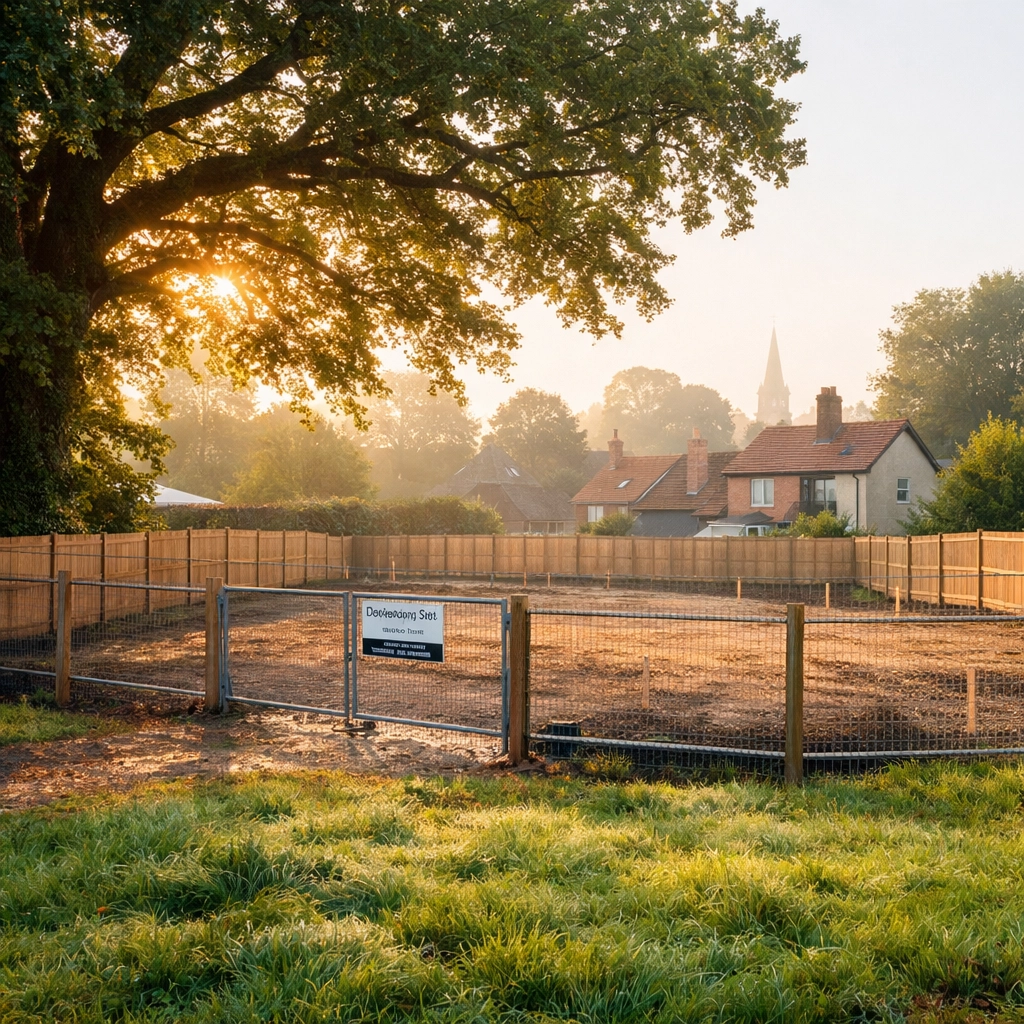
The 2026 Timeline: When Does it Kick In?
Timing is everything in planning. While the announcement has been made, it isn’t “law” quite yet.
The government is expected to bring forward secondary legislation before the summer recess. The current target date for the 0.2 hectare exemption to take effect is 31 July 2026 [1][3].
Until that date, the current rules still apply. If you are submitting a planning application today, you still need to follow the existing framework, which for most small sites involves the Small Sites Metric (SSM). It’s vital not to jump the gun; assuming you’re exempt before the official commencement date is a sure-fire way to land a refusal or a lengthy delay.
Escaping the “Viability Trap”
Why did the government decide to draw the line at 0.2 hectares? It all comes down to the “viability trap.”
Research into over 1,000 approved planning applications showed that the administrative cost of complying with BNG (hiring ecologists, running metrics, legal fees for 30-year agreements) was disproportionately high for the smallest sites [3]. In some cases, the cost of the BNG process was actually higher than the value of the biodiversity gain being delivered.
By exempting sites at or below 0.2 hectares, the government is essentially saying that the “juice isn’t worth the squeeze” for the tiniest plots. This allows local planning authorities to focus their limited resources on larger developments where 10% gains actually move the needle for UK nature recovery.
The “Priority Habitat” Catch: Don’t Get Caught Out
This is the most important part of the new legislation: The exemption does not apply if priority habitats are present on the site.
Even if your site is only 0.1 hectares, if it contains ancient woodland, species-rich grassland, or other high-value habitats listed under Section 41 of the Natural Environment and Rural Communities (NERC) Act, you are not exempt [1][3]. You will still need a full ecology survey and a BNG assessment.
This is where many developers get tripped up. You might look at a scrubby patch of land and think it’s “nothing,” but an ecologist might identify it as a specific priority habitat that triggers the full BNG requirement.
The June 10 Deadline: Bigger Changes are Coming
The 0.2-hectare rule isn’t the only thing on the table. There is a much larger conversation happening right now regarding brownfield land.
The government is currently consulting on even more significant exemptions for brownfield sites, potentially up to 2.5 hectares in size. The goal here is to turbocharge urban regeneration by removing ecological barriers on previously developed land.
Take note: The consultation for these broader exemptions (including the 2.5ha brownfield proposal) closes on June 10, 2026.
If you are a developer working primarily on brownfield sites in cities like Birmingham, Leicester, or Wolverhampton, this is a date to circle in your calendar. The outcome of this consultation could further simplify your pipeline toward the end of 2026 and into 2027.
Local Context: Impact Across the Midlands
As a firm rooted in the West Midlands, we see how these changes hit the ground in places like Staffordshire, Warwickshire, and Worcestershire.
In many of our local towns, small-scale infill development is the lifeblood of the housing supply. Whether it’s a garden plot in Solihull or a small commercial conversion in Walsall, the 0.2-hectare exemption is going to make these projects significantly more attractive.
However, local councils in the Midlands are known for being diligent. They will be looking closely at that “Priority Habitat” exclusion. We always recommend getting a Preliminary Ecological Appraisal (PEA) early in the process to confirm whether your “exempt” site truly stays exempt.
What Should You Do Right Now?
If you have a project that is roughly 0.2 hectares or smaller, here is your three-step action plan for the next few months:
- Check Your Red Line: Is your site truly under 0.2 hectares? Remember, this is measured by the total site area within the planning boundary, not just the building footprint.
- Assess Habitat Quality: Don’t assume your site is “low value.” If there are protected species or priority habitats involved, the exemption might not apply. A quick site visit from an ecologist can save you months of delays later.
- Mind the Gap: If you are submitting before July 31, 2026, you must still use the Small Sites Metric. If your project can wait until August, you might save on BNG unit costs.
How The BNG Guy Can Help
Navigating 2026’s changing legislation doesn’t have to be a nightmare. At The BNG Guy, we specialise in making ecology simple for developers. We don’t just count the grass; we help you find the fastest, most cost-effective route to planning approval.
Whether you need to check if you qualify for the new 0.2 hectare exemption, or you need a bat survey in Solihull to clear a planning condition, we’ve got you covered.
Need a quick quote or a sanity check on your site size? Give us a shout today. We respond to most enquiries within minutes, keeping your project moving forward while the policy catches up.
FAQ: The 0.2 Hectare BNG Exemption
Q: Does the 0.2ha exemption apply to commercial sites too?
A: Yes. The current guidance suggests it applies to all development types where the site area is 0.2 hectares or below, provided priority habitat isn’t impacted [3][6].
Q: What if my site is exactly 0.2 hectares?
A: The exemption applies to sites at or below the threshold. If your red line is 0.20ha, you should be covered once the law takes effect in July 2026.
Q: Can I ignore ecology surveys if I’m exempt from BNG?
A: Absolutely not! BNG is separate from protected species legislation. You may still need bat surveys or great crested newt testing if there is a risk to protected wildlife.
Q: What happens to the Self-Build exemption?
A: Interestingly, as the 0.2ha exemption comes in, the specific “Self and Custom Build” exemption is expected to be removed to simplify the system and prevent misuse [3][5]. Most self-builds will naturally fall under the 0.2ha rule anyway.
Q: Where can I find more updates?
A: Keep an eye on our blog for the latest on the June 10 brownfield consultation and the July implementation dates.
Sources:
[1] Government Policy Statement on BNG Exemptions, April 2026.
[2] “BNG Exemptions: A Risk to Nature Recovery?” Ecology Journal, 2026.
[3] DEFRA: Summary of Consultation Responses on Small Site BNG.
[4] Natural England: Priority Habitat Inventory Updates 2026.
[5] Planning Resource: The Removal of Self-Build BNG Exemptions.
[6] UK Planning Inspectorate: Guidance on Area-Based Exemptions.